
What to eat in Ethiopia: a journey through taste, tradition, and coffee
In Ethiopia, food is community. From injera to the legendary coffee ceremony, here’s how to eat like a local.
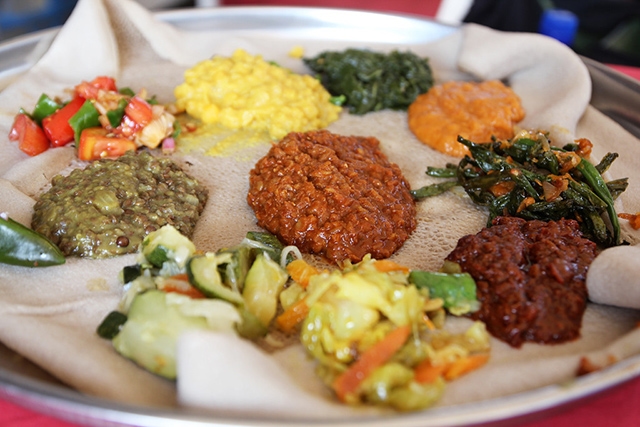
Meals in Ethiopia are shared from a single round platter and eaten with the hands. You’ll be invited to taste, talk, and slow down. Whether you’re in a family home in Lalibela or a restaurant in Addis Ababa, the experience blends flavor with friendship.
Injera: the heart of Ethiopian food
Injera is a soft, spongy flatbread made from teff, an ancient, gluten-free grain rich in iron and calcium. The fermented batter is baked on a hot griddle called a mitad, creating tiny pores that soak up sauces beautifully. Injera is plate, utensil, and centerpiece combined.


The famous stews: wot and tibs
Ethiopian cuisine is built around richly spiced stews called wot and sizzling sautéed meats known as tibs. Signature dishes include:
- Doro wot: chicken slow-cooked in berbere (a spice mix of chili, garlic, ginger, and cardamom), often served with boiled eggs.
- Siga wot: beef stew with a deep, peppery base.
- Tibs: seared beef or lamb with onions, peppers, and rosemary, served sizzling.
- Kitfo: minced beef seasoned with spiced clarified butter and chili; served raw (tere) or lightly cooked (leb leb).
- Shiro: velvety chickpea or lentil stew — the comfort dish you’ll crave again.
Eating with your hands
Eating with the right hand is part of the ritual: tear a piece of injera, scoop, and enjoy. If a host feeds you a bite directly, that’s gursha — a gesture of affection and welcome.
Fasting and vegetarian dishes
With many Orthodox fasting days, Ethiopia is a vegetarian paradise. Look for:
- Misir wot: spiced red lentils.
- Atkilt: cabbage, carrots, and potatoes.
- Gomen: sautéed collard greens.
- Azifa: lemony green lentil salad.
The legendary coffee ceremony

Beans are roasted, hand-ground, and brewed in a jebena. Coffee is served in three rounds — abol, tona, and baraka — often with popcorn or roasted barley. Accepting a cup is accepting friendship.
Desserts and drinks
- Himbasha: lightly sweet, spiced bread.
- Tej: fragrant honey wine in a rounded glass flask.
- Tella: traditional grain beer.
- Areqe: strong local spirit — sip carefully.
Final taste
Ethiopian food is flavor, history, and hospitality on one plate. Share injera, try a gursha, and linger over coffee — that’s how a meal becomes a memory.